Not a feature list. A walkthrough of what each pain point actually looks like day to day, and what's different once it's fixed.
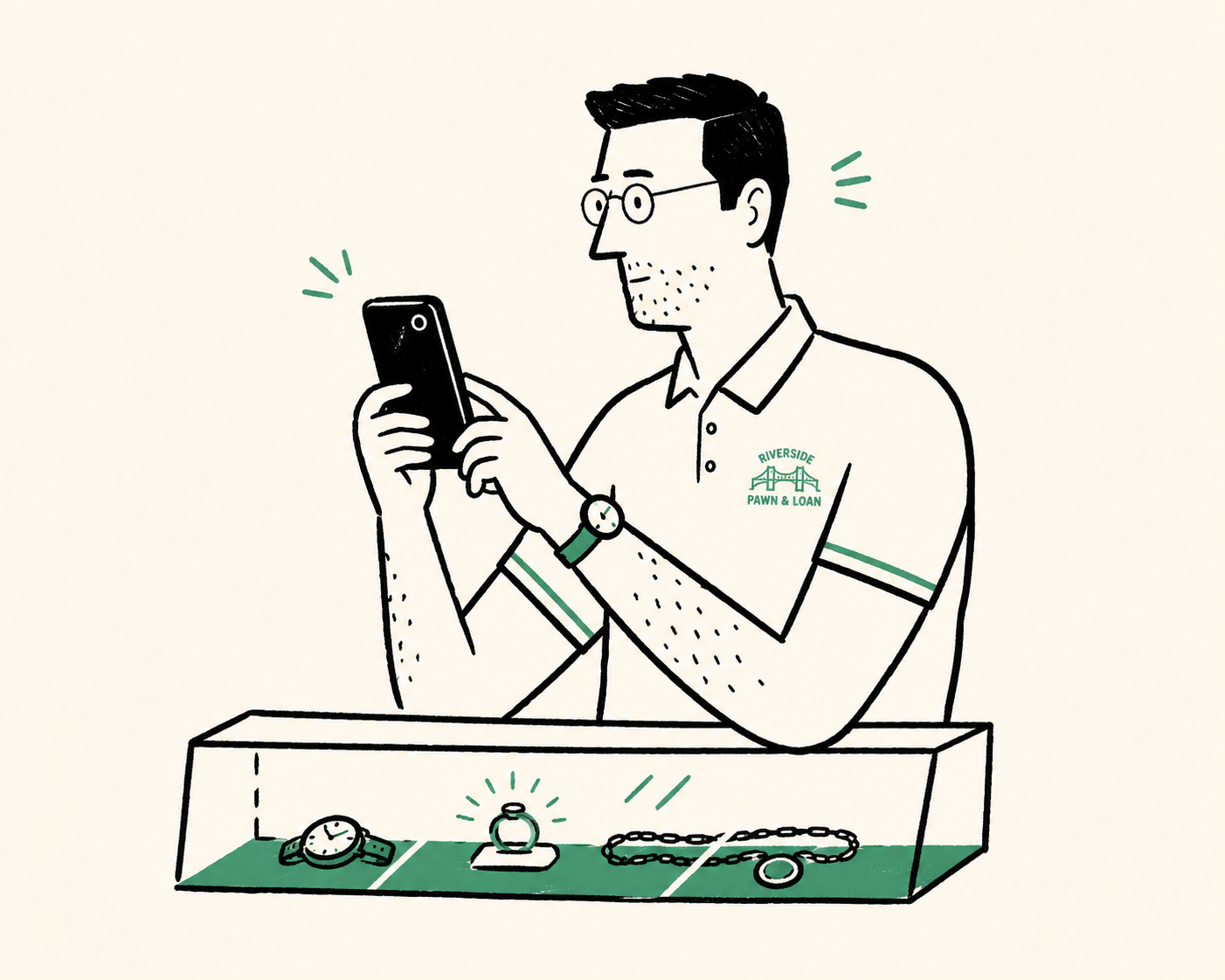
A pawn shop moving jewelry, electronics, instruments, tools, and designer goods that come off forfeited loans. Runs the counter with two staff across shifts, posts resale-ready items to Facebook most days.
Marcus and Riverside Pawn & Loan are an illustrative example, not a specific real customer — but this is exactly how it plays out for shops like his.
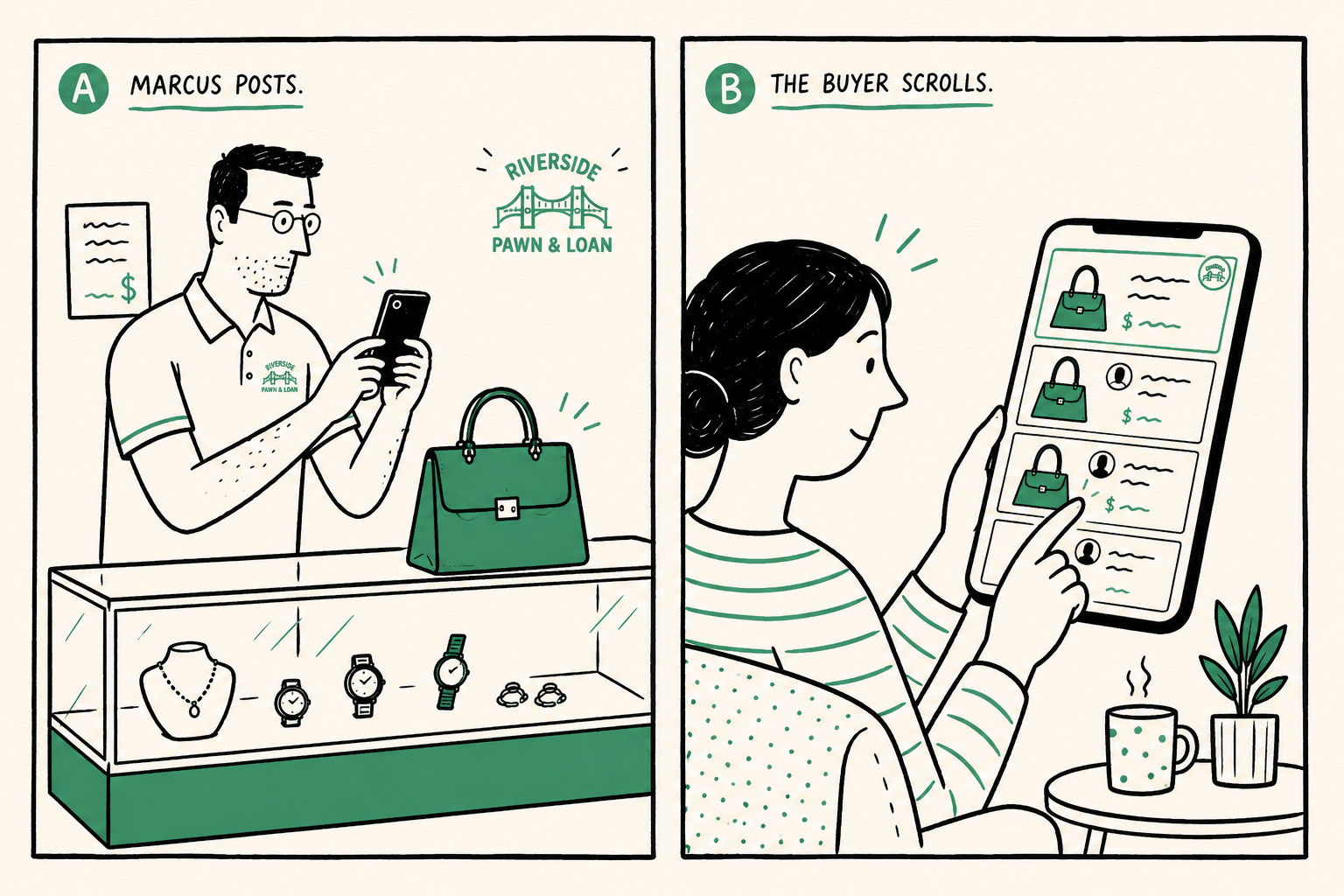
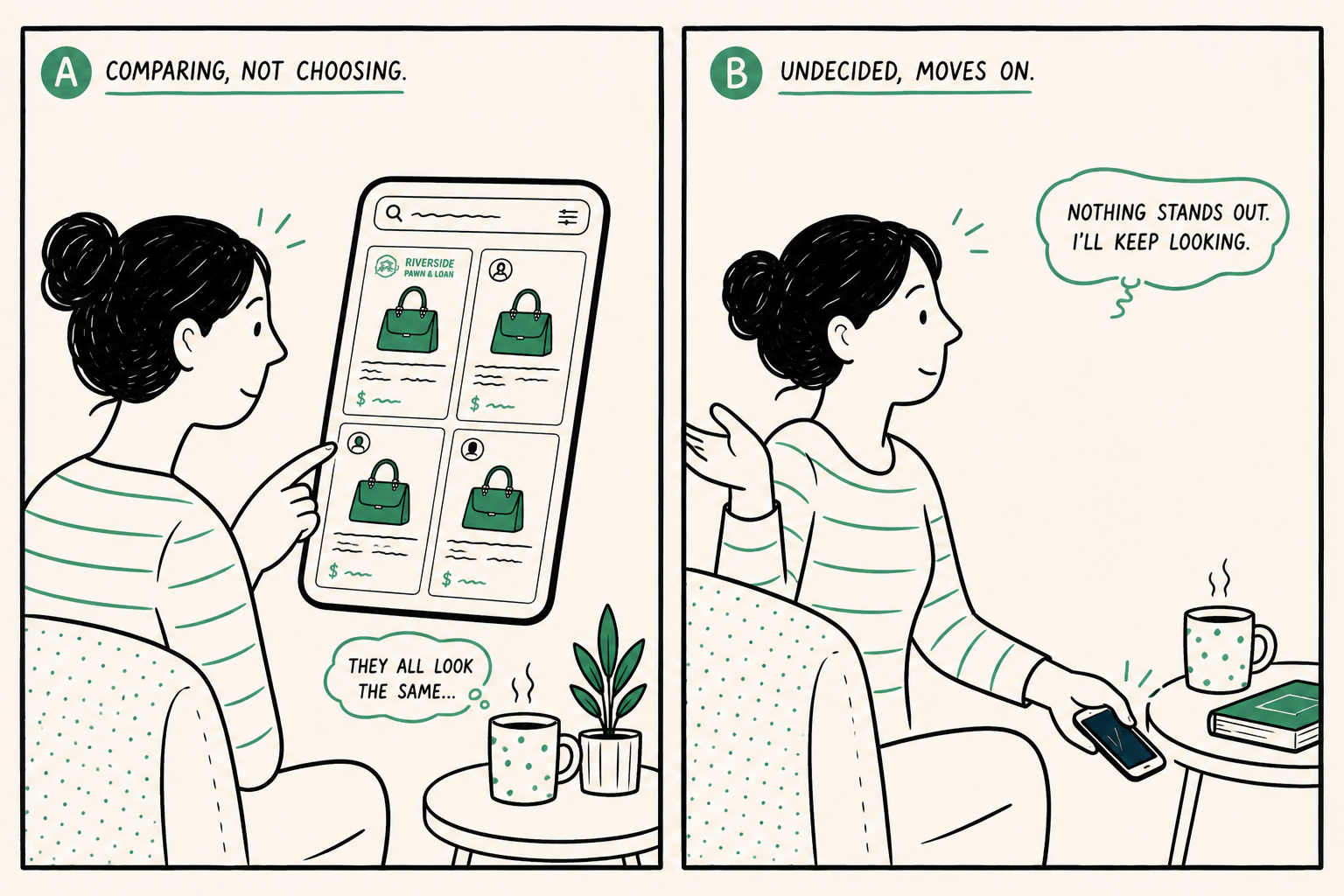
Marcus posts a barely-used Louis Vuitton bag that came off a forfeited loan. Right underneath it, three other sellers' designer bags show up as "similar items." A buyer he brought in clicks one of those instead.
His catalog at soldnearyou.com/springfield-mo/riverside-pawn only ever shows Riverside's inventory. No other seller's listings can appear on his pages.
Every customer his marketing brings in stays looking at his stuff, not a stranger's.
Only Riverside Pawn & Loan shows up. No other seller's listings can appear here.
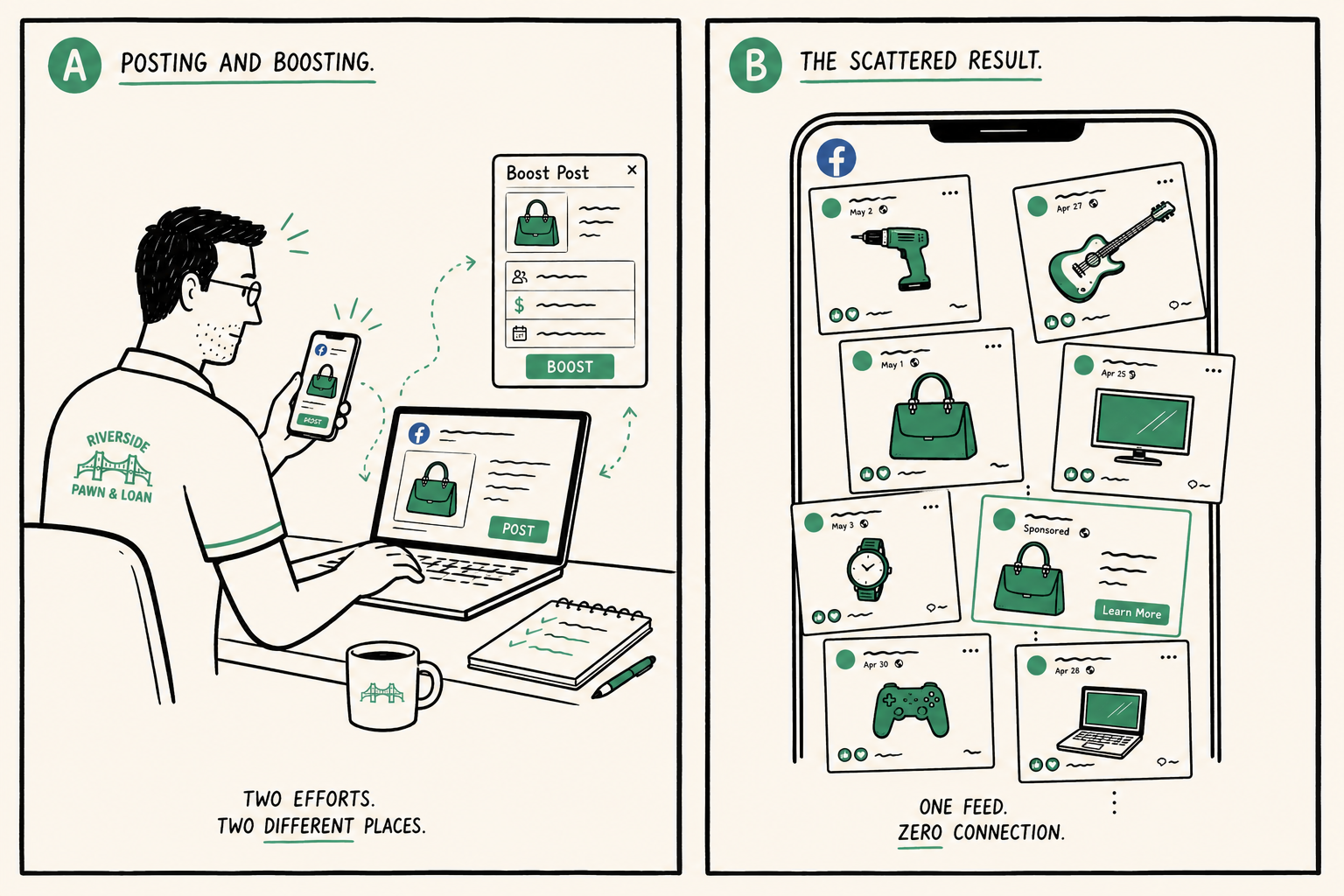
Marcus posts to Facebook, even ran a small paid Instagram ad once. Both land on the same scattered wall of posts — nothing he can point someone to and say "here's everything we've got."
Every post, every ad can end with one link. Category-specific ones too, so a designer-goods ad lands right on that page.
Marcus's marketing finally has somewhere real to send people.
One link, every time — this one lands straight on the designer-goods page.
Someone browses a handful of similar designer-bag listings — Riverside's among them. Nothing about Riverside gives them a reason to pick it specifically, so they move on without deciding.
Built-in offers notice that browsing and surface a real discount automatically — no code to hand out, no manual tracking.
That same browser sees "10% off all designer goods" pop up, and picks up the phone.
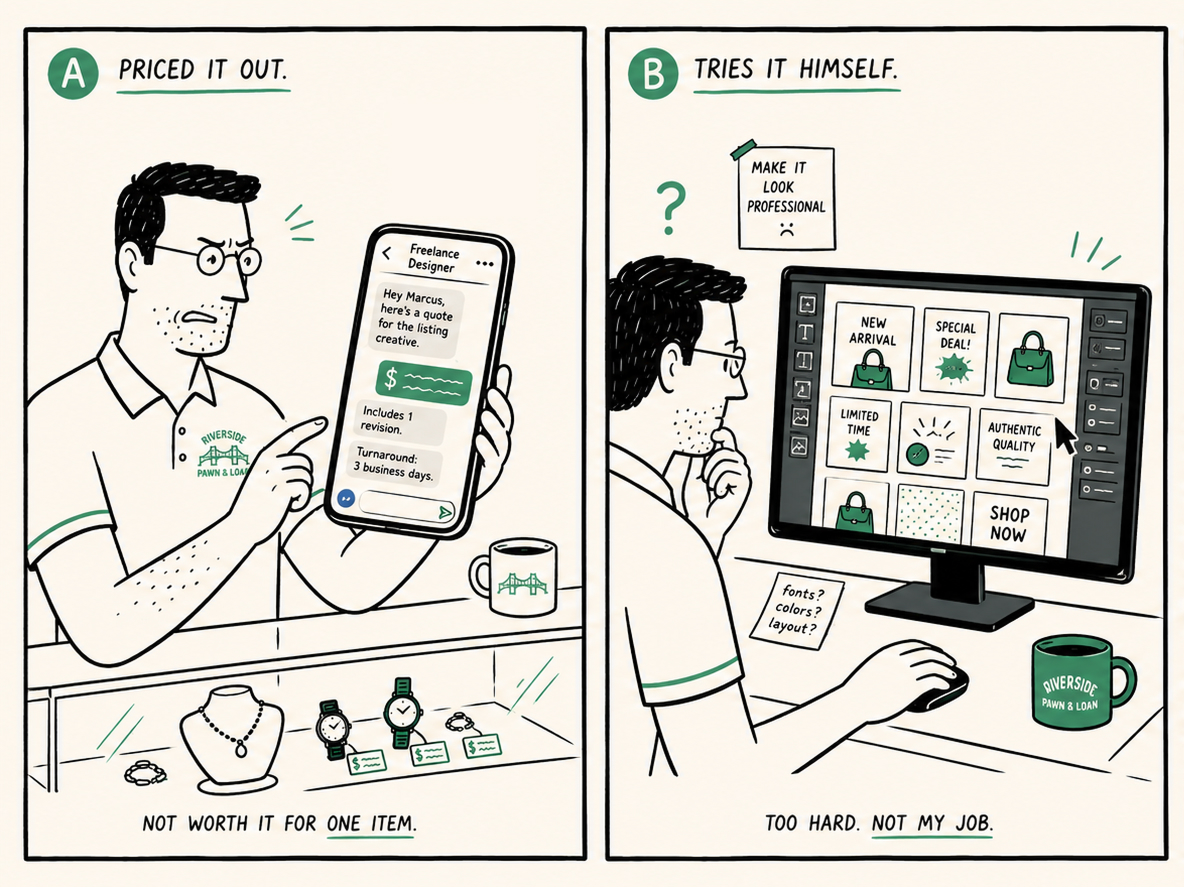
A designer bag off a forfeited loan is worth real money, but hiring a freelance designer for one Instagram post doesn't pencil out. So the post that actually goes out is just that phone photo dropped straight into Facebook: no price, no branding, no layout. Next to an actual boutique listing, a $600 bag reads like a garage-sale find.
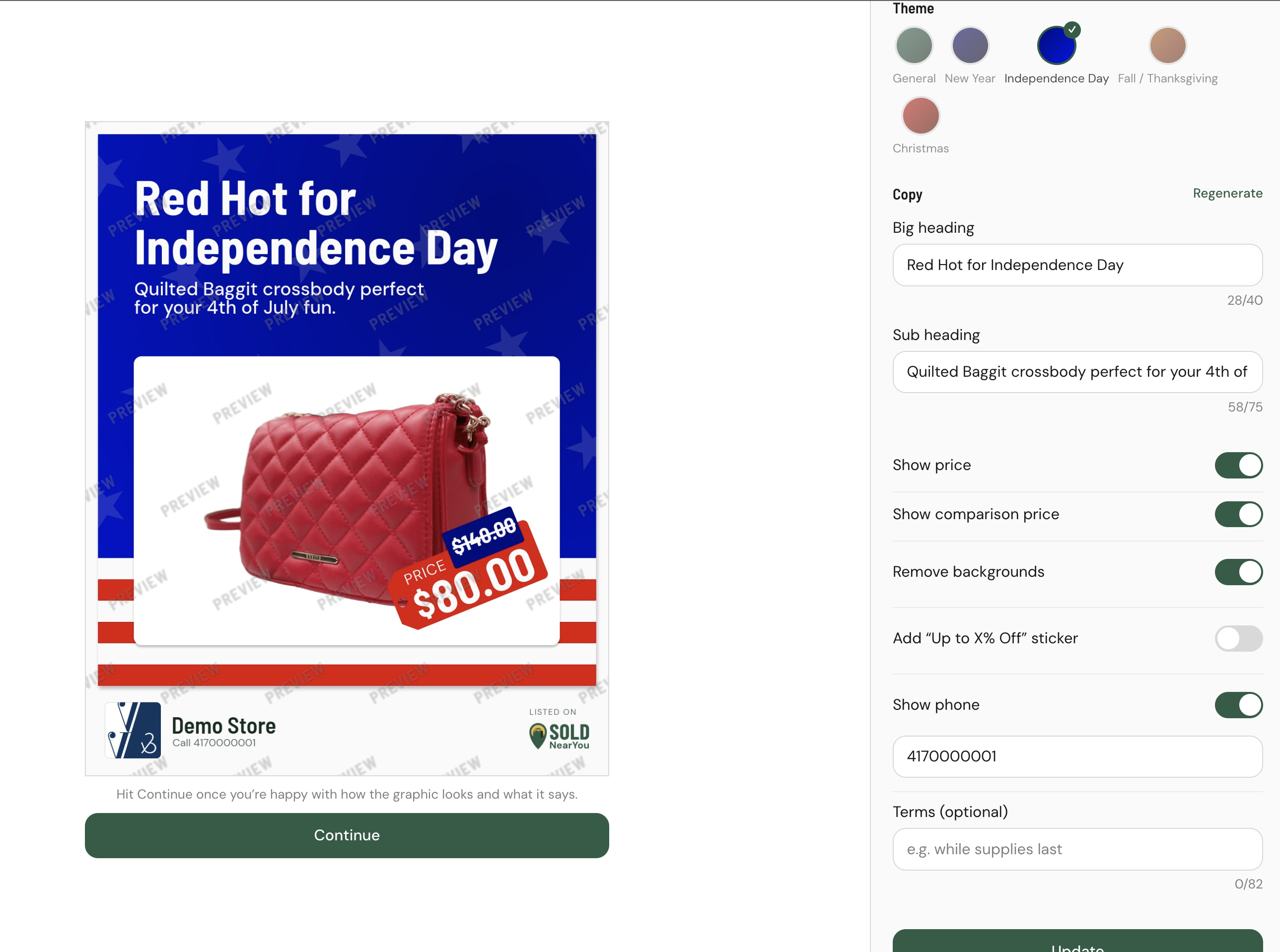
Marcus picks a listing in the dashboard and taps once — a branded, ready-to-post graphic with the price and his logo already on it, polished enough to match what the item is actually worth.
New designer goods actually make it to Instagram, the same day they come in, looking like they're worth the price tag.
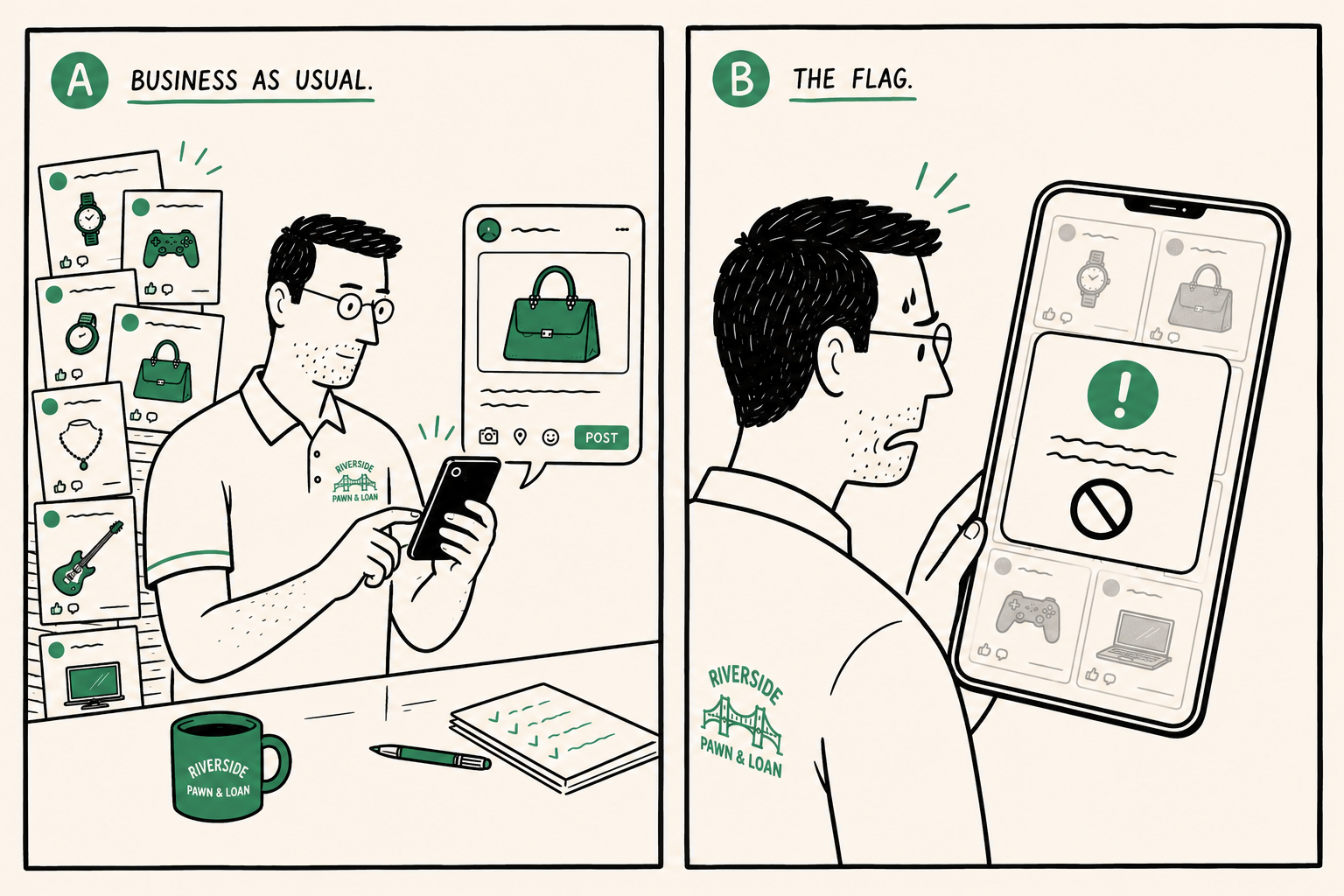
Facebook doesn't love commercial activity on a personal profile. Marcus has posted enough that one bad week, one report, could get him restricted — and every bit of reach he's built disappears with it.
Marcus's catalog lives at his own permanent URL, outside anyone else's rulebook.
Nothing Marcus has built can be taken away by someone else's policy change.
Same URL, no matter what happens anywhere else.
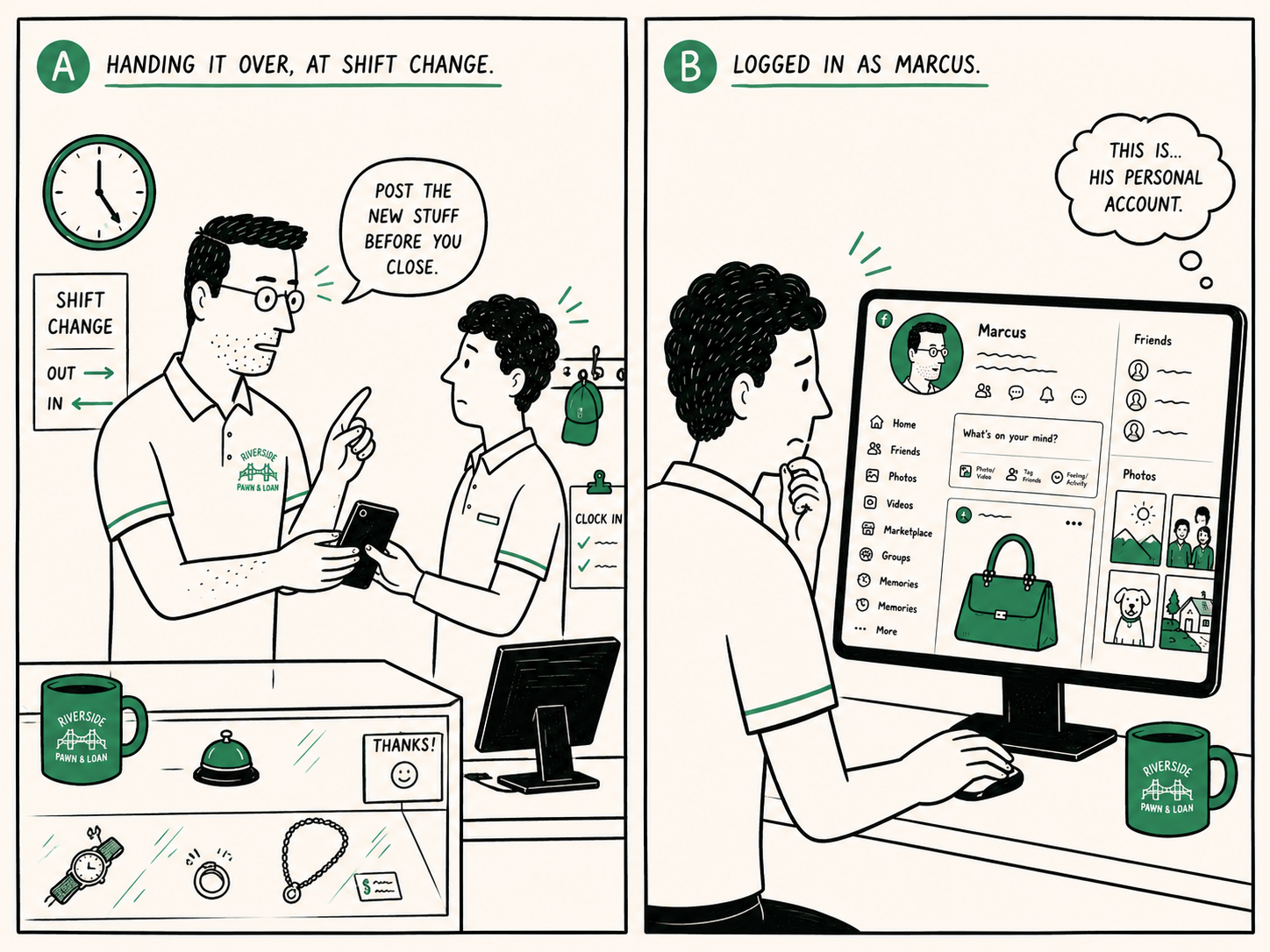
Riverside runs two counter clerks across shifts, and whoever's on duty needs to list whatever just came off a forfeited loan. The only way to do that on Facebook is to hand over Marcus's actual personal login, shift after shift.
Marcus's team gets their own logins, scoped to the store — nothing personal shared, no matter who's on the counter.
Whoever's on shift lists inventory without ever touching Marcus's own account.
Separate logins, each scoped to the store — nothing personal shared, whoever's on shift.
Where Riverside Pawn & Loan stands now
Same inventory, same counter, same Marcus. Just a lot fewer ways for a buyer to slip through the cracks.
Book a demo
15 minutes. We'll set up a sample store with a few of your items live on the call — so you see exactly how it looks before you decide.
We'll reach out within one business day to set up your demo.