Not a feature list. Two people at the same mall, each running their own SoldNearYou account, and what's different for both of them once it's in place.
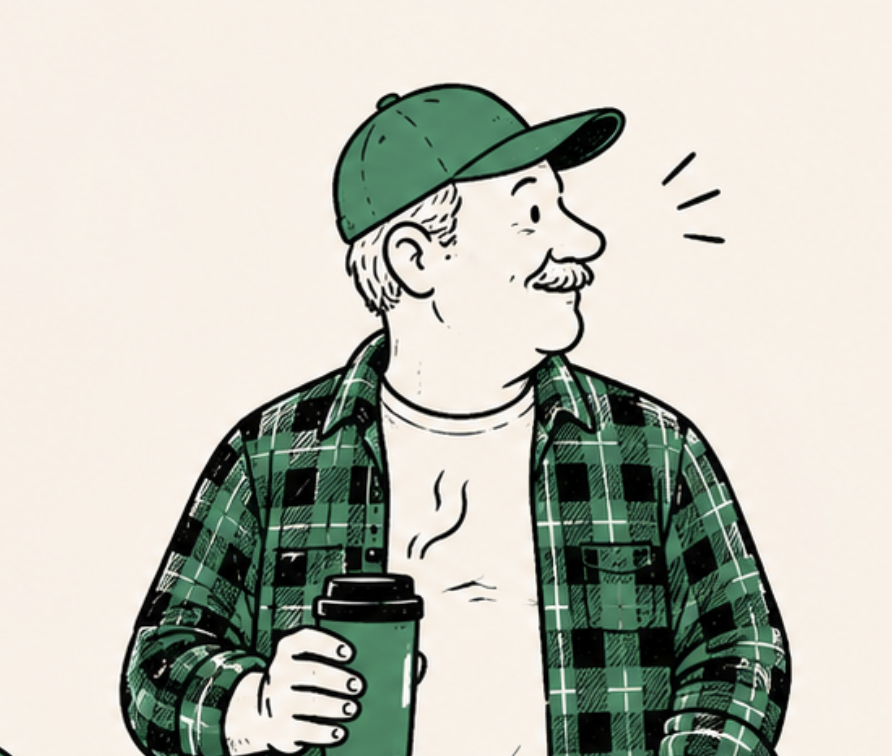
Retired maintenance supervisor turned weekend picker. Rents one booth at Founders' Row — old radios, tools, glassware, whatever turns up — and runs it as a side business, with his own separate SoldNearYou account.
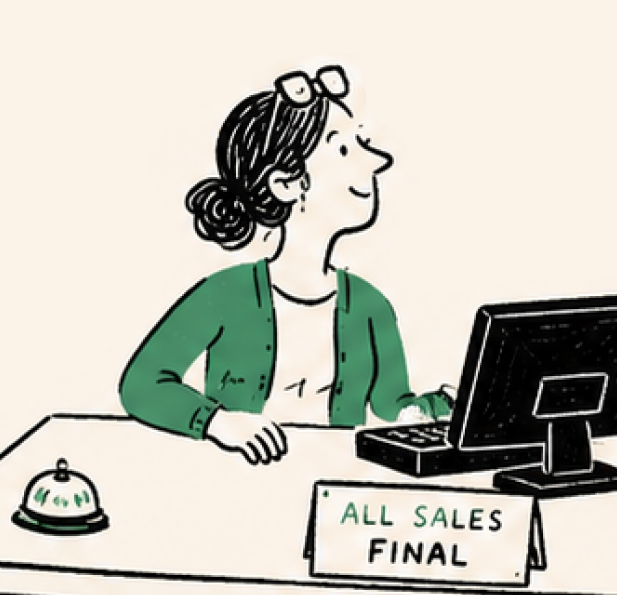
Owns the mall. Runs several booths herself with a couple of part-time helpers, and rents the rest of the floor to independent vendors who run their own businesses — Jack, above, is one of them.
Linda, Jack, and Founders' Row Antique Mall are illustrative examples, not specific real customers — but this is exactly how it plays out for a mall and its vendors. Each of them runs a fully separate SoldNearYou account; neither's subscription covers the other.
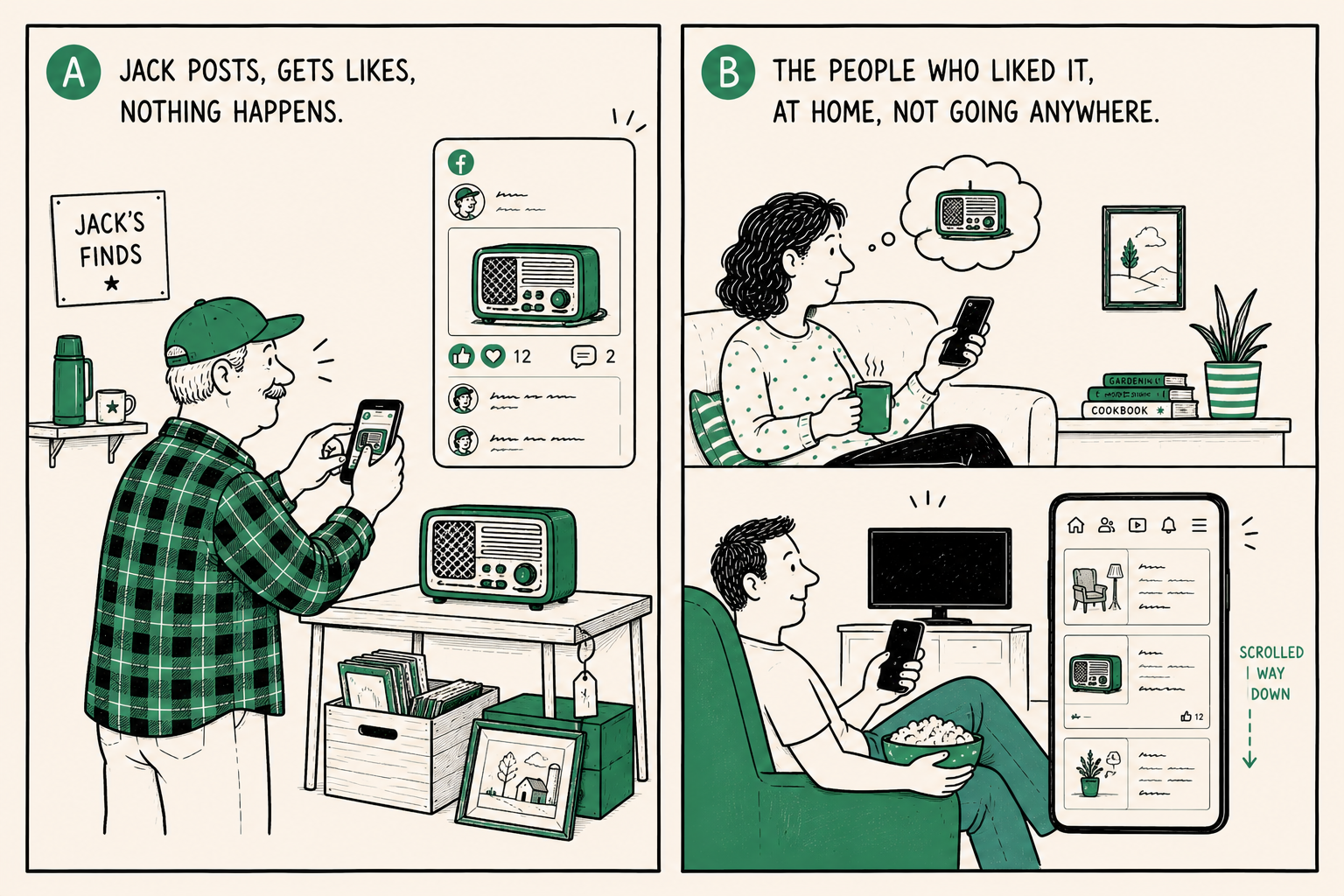
Jack posts a photo of a nice vintage radio to Facebook. Friends like it, a couple people comment. But there's no way for anyone to see what else he's got or exactly which booth to look for at Founders' Row, so most of the people who liked it never make the trip out.
Jack drops a link to his own catalog in the same post — his booth, his items, right there. Someone who clicks through already knows what they want and exactly where to find it before they leave the house.
The people who show up at Miller's Attic now are already sold — motivated buyers, not just mall foot traffic.
One link in the post — everything Jack has, right where it is.
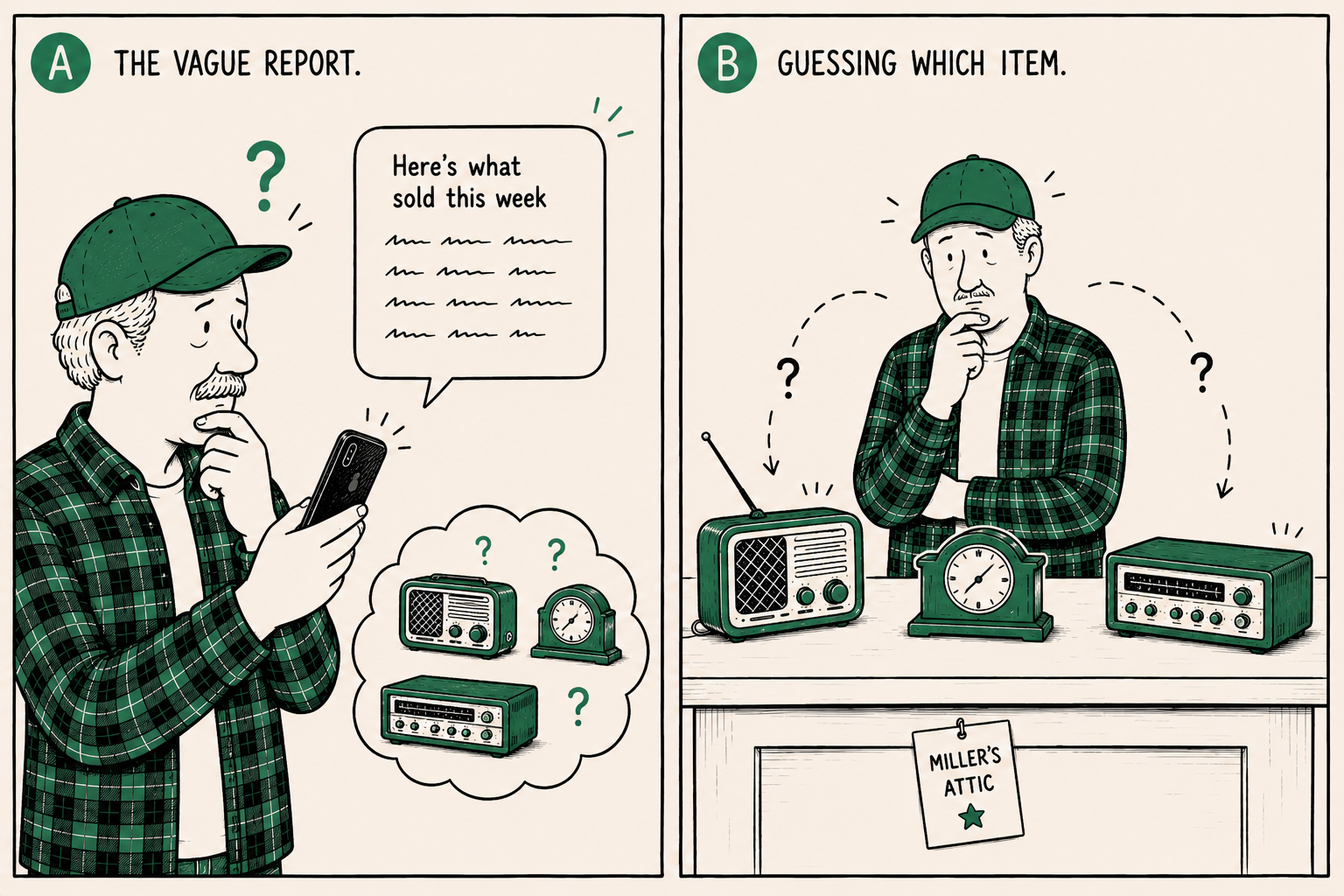
At the end of the week, Jack gets a text from the front desk listing what sold out of Miller's Attic — except it reads like "the radio thing," "some kind of skillet set?" He can't tell exactly which items moved, so figuring out what's actually selling is mostly guesswork on his end too.
Now the front desk logs the SKU straight off the tag when something sells. Jack gets a short list of his own SKUs instead — codes he already recognizes, because he's the one who generated them when he listed the items.
Jack knows exactly what sold, no more piecing it together from a vague text.
Codes Jack already recognizes — no more "the radio thing?"
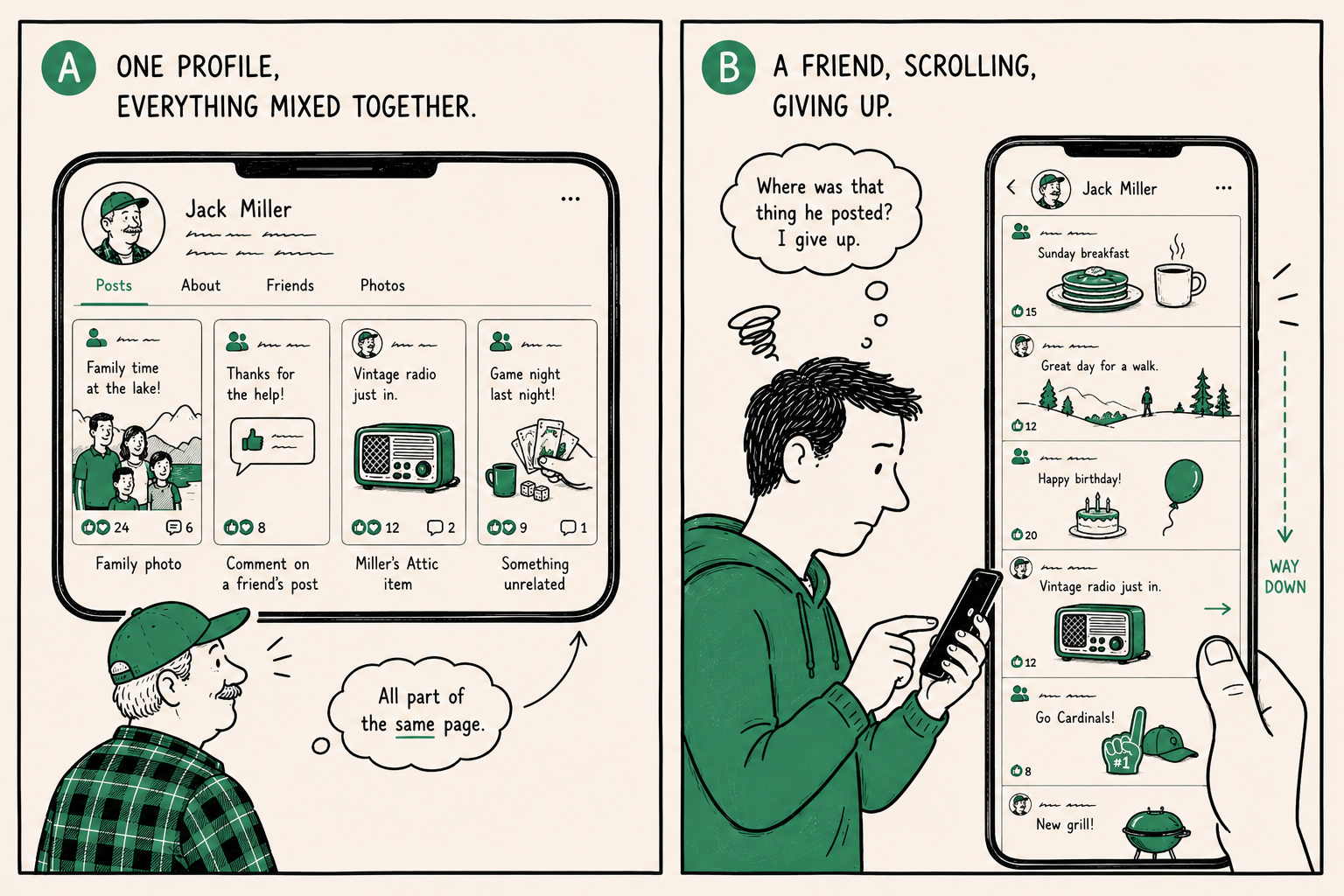
Every post Jack makes about Miller's Attic goes out from the same personal profile he uses for everything else — family photos, comments on friends' posts, the occasional garage-sale find mixed in. There's no single place that's just his booth. A friend who wants to see what's new has to scroll back through weeks of unrelated posts to find it.
One link goes in every post now, pointing straight to soldnearyou.com/round-top-tx/millers-attic — his own page, nothing else mixed in.
Anyone curious about Miller's Attic has one place to check, instead of digging through Jack's whole timeline.
Same link, every post — always current, never buried.
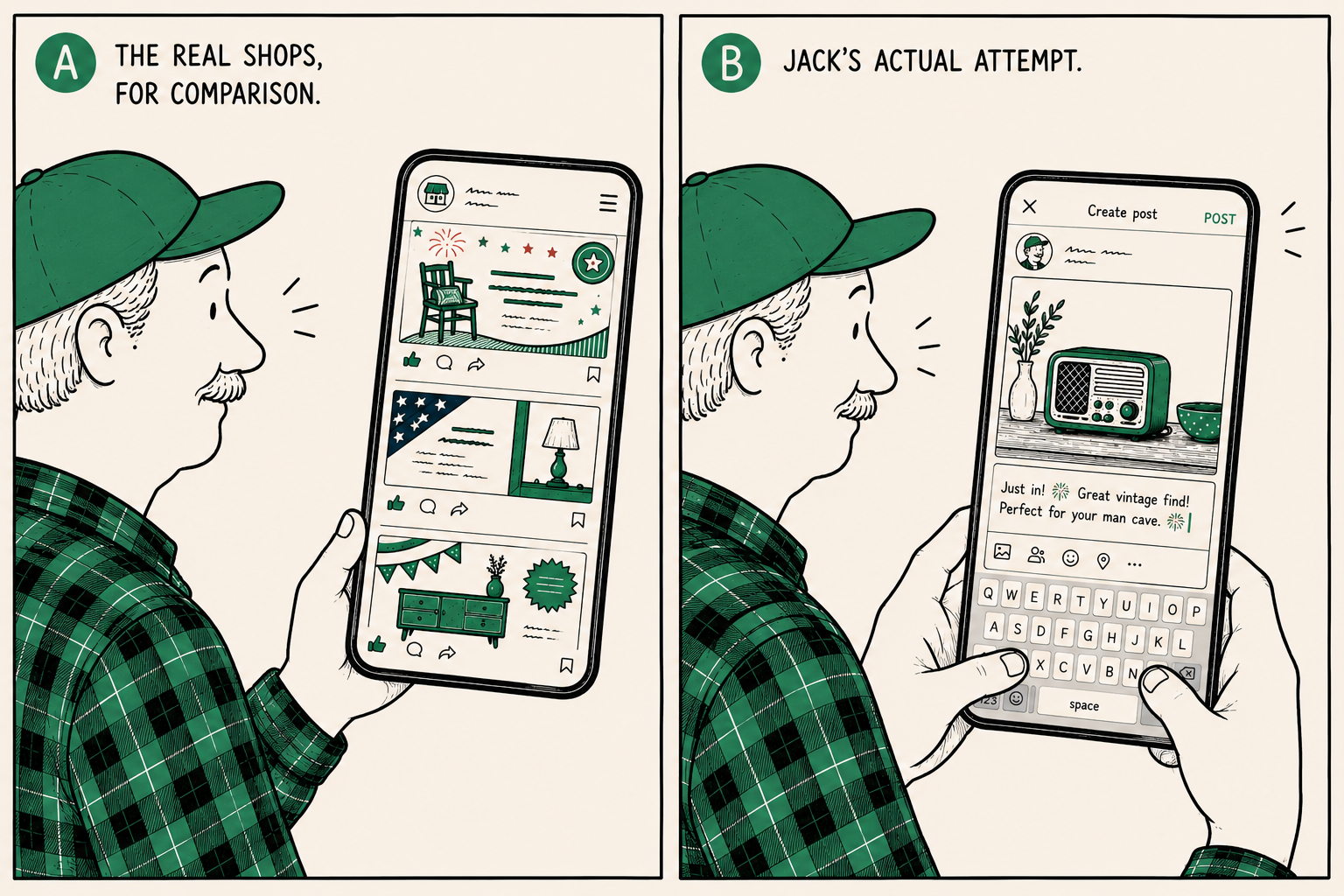
Jack sees the real antique shops running polished seasonal posts — a Fourth of July banner, a clean layout, the whole look. He wants that for Miller's Attic too, but the closest he can get is typing something like "🎆 4TH OF JULY FIND 🎆" into the caption of the same bare photo he always posts. The item looks exactly the same — just the words around it changed.
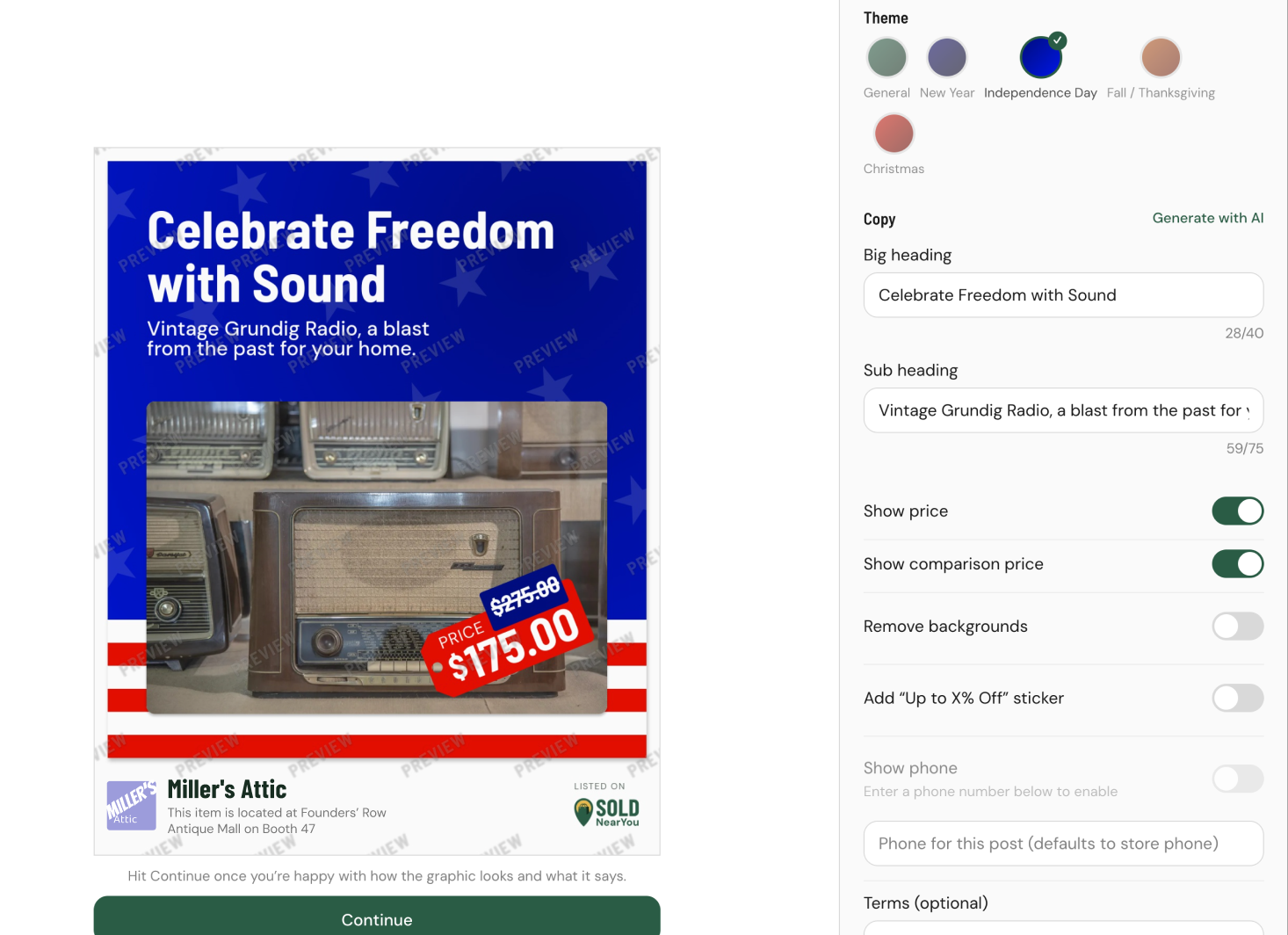
Jack picks the same listing and taps a seasonal template — a branded, holiday-themed graphic with the price and Miller's Attic name already built in, done in seconds.
Jack's post finally looks like it came from an actual shop, not just a caption with extra emoji.
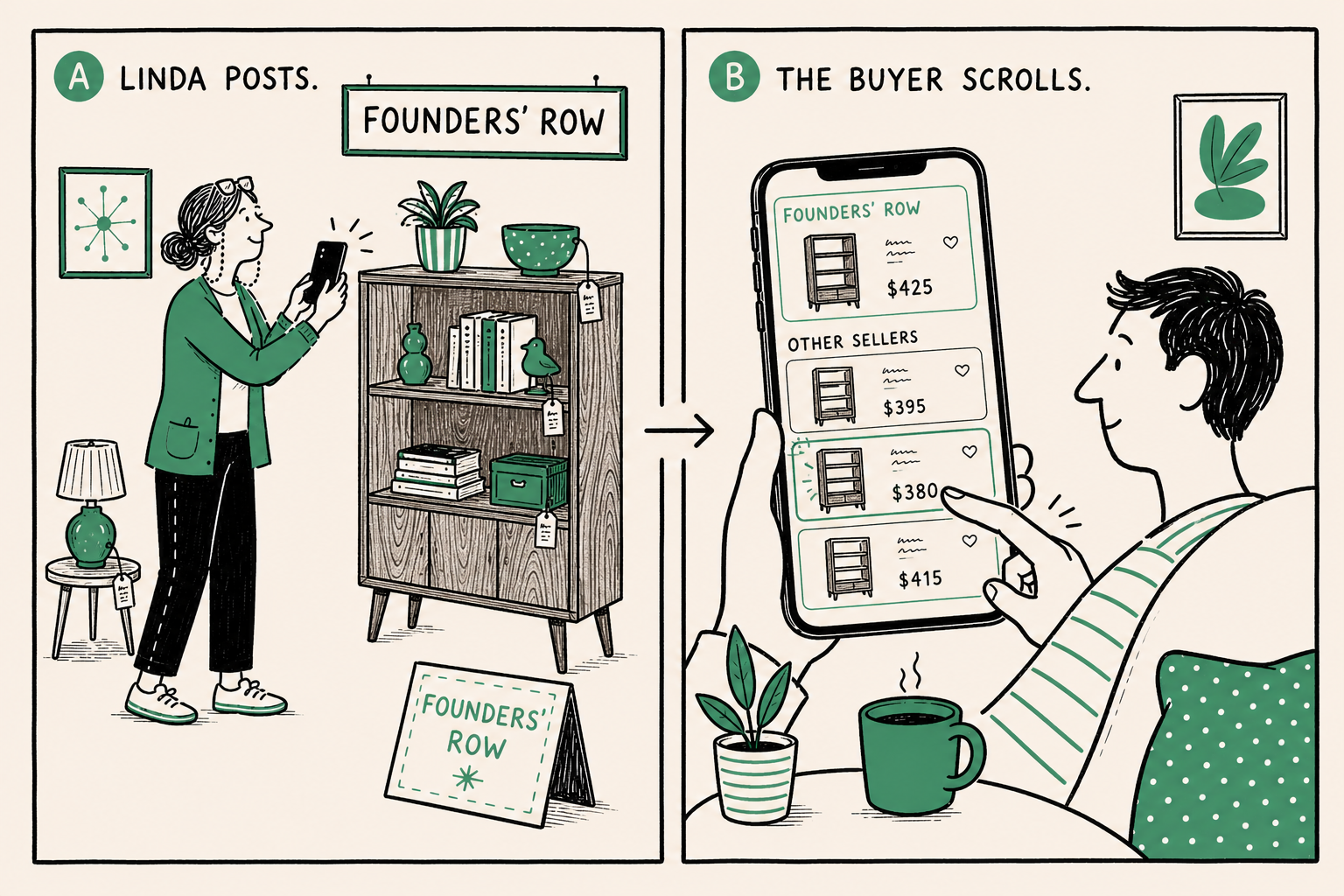
Linda posts a mid-century teak sideboard from one of her own booths to Facebook Marketplace. Right underneath it, three other sellers' similar furniture pieces show up as "similar items." A buyer she brought in clicks one of those instead.
Her catalog at soldnearyou.com/round-top-tx/founders-row-antiques only ever shows Founders' Row's inventory. No other seller's listings can appear on her pages.
Every customer her marketing brings in stays looking at her stuff, not a stranger's.
Only Founders' Row shows up. No other seller's listings can appear here.
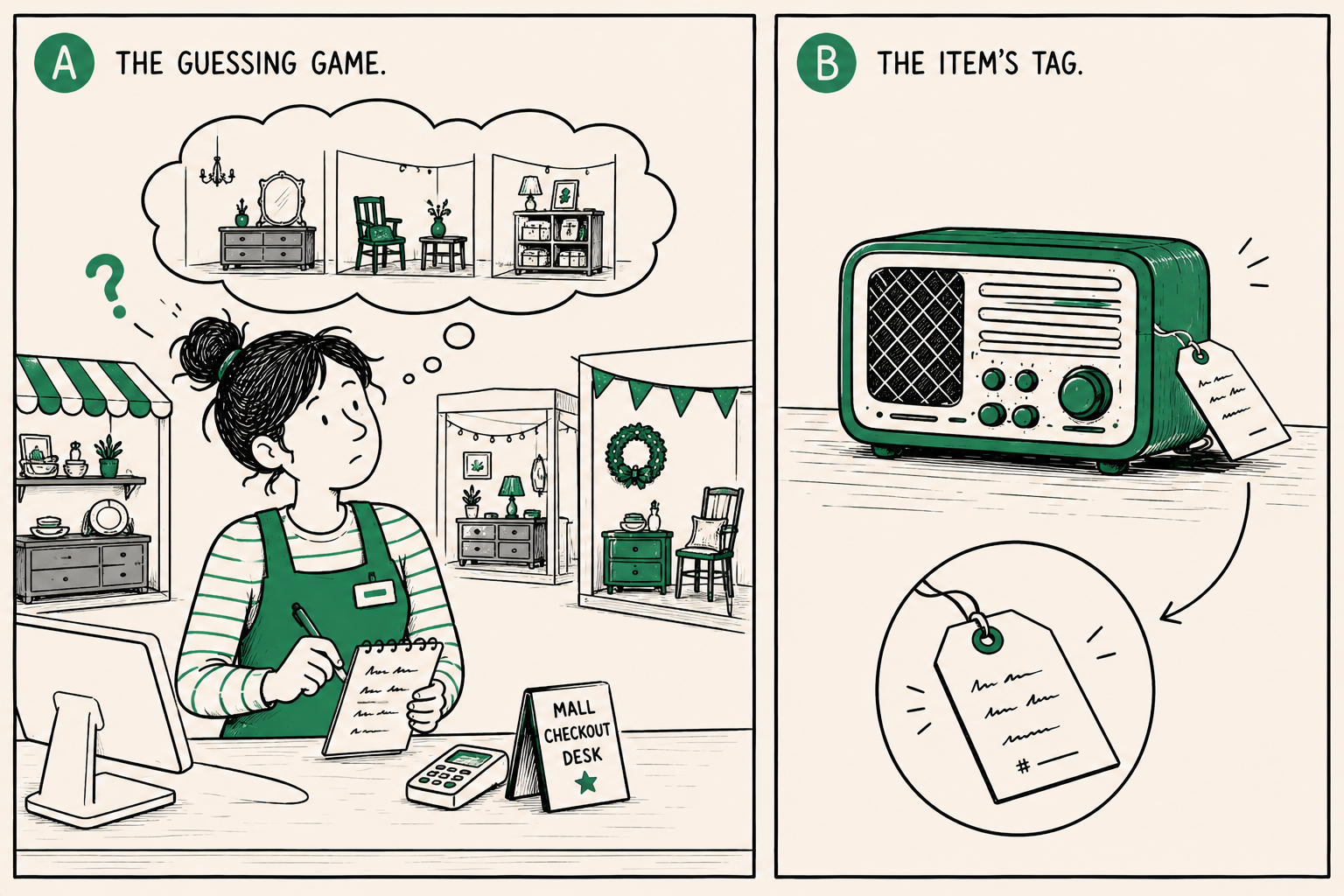
Founders' Row has one register up front for the whole mall — every booth's sales get rung up there, including Jack's. When something from Miller's Attic sells, the front-desk staff scribble a rough description to figure out later what it was: "sold — the radio thing, Jack's booth?" It's a guess dressed up as a note, and Linda's own records rarely match up cleanly with what's actually still in the booths.
Jack signed up to get his own posts working harder — that's the whole reason he did it. As a side effect, every item he lists now gets a permanent, unique SKU, and that code ends up right on the tag. Neither he nor Linda had to coordinate anything for this to work — they're just two separate accounts that happen to share a checkout counter.
Front-desk staff jot down the SKU instead of guessing, and Linda's own records finally match what's actually in the booths.
One code, already on the tag. No more "the radio thing?"
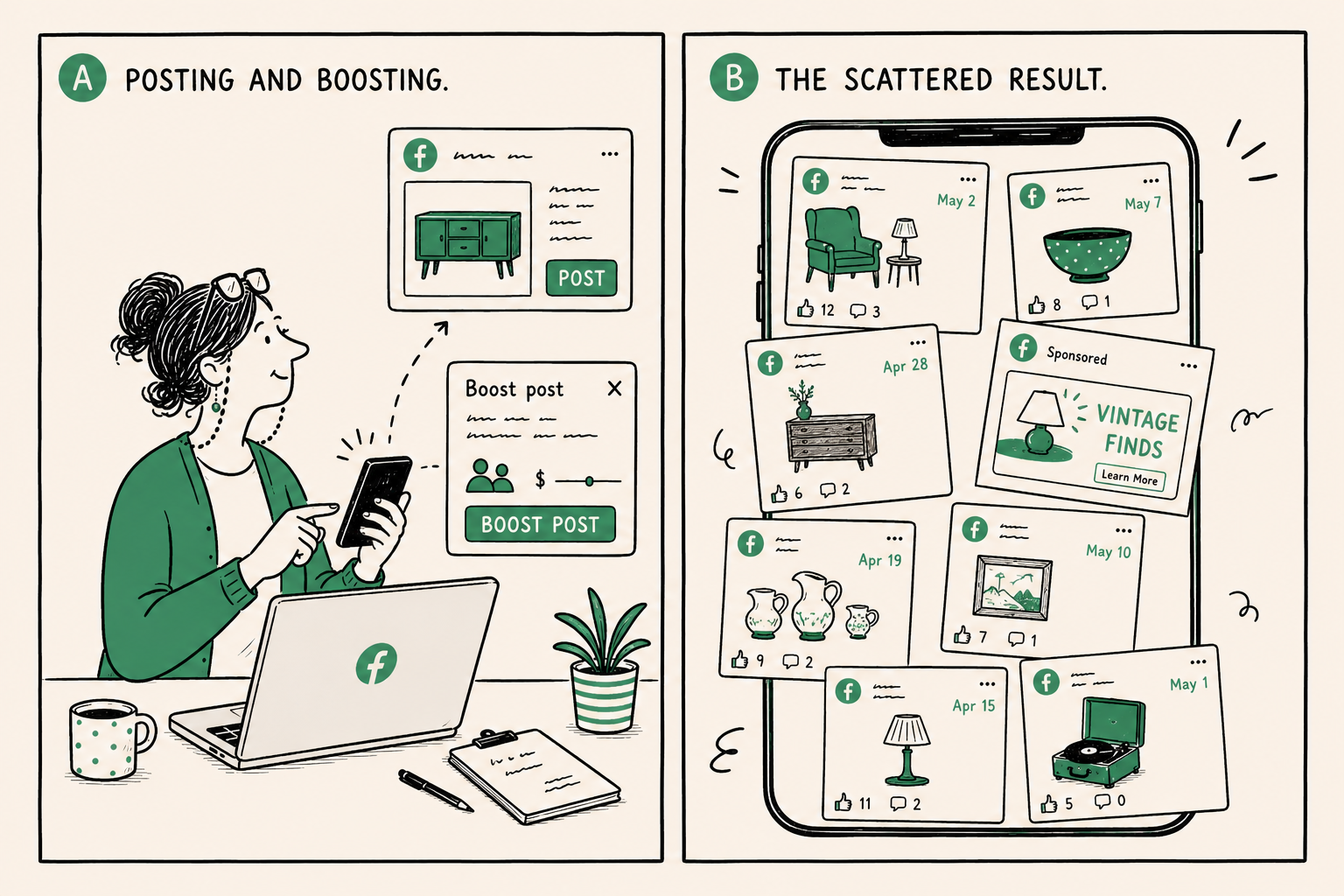
Linda posts to Facebook, even ran a small paid Instagram ad once. Both land on the same scattered wall of posts — nothing she can point someone to and say "here's everything we've got."
Every post, every ad can end with one link. Category-specific ones too, so a furniture ad lands right on that page.
Linda's marketing finally has somewhere real to send people.
One link, every time — this one lands straight on the furniture page.
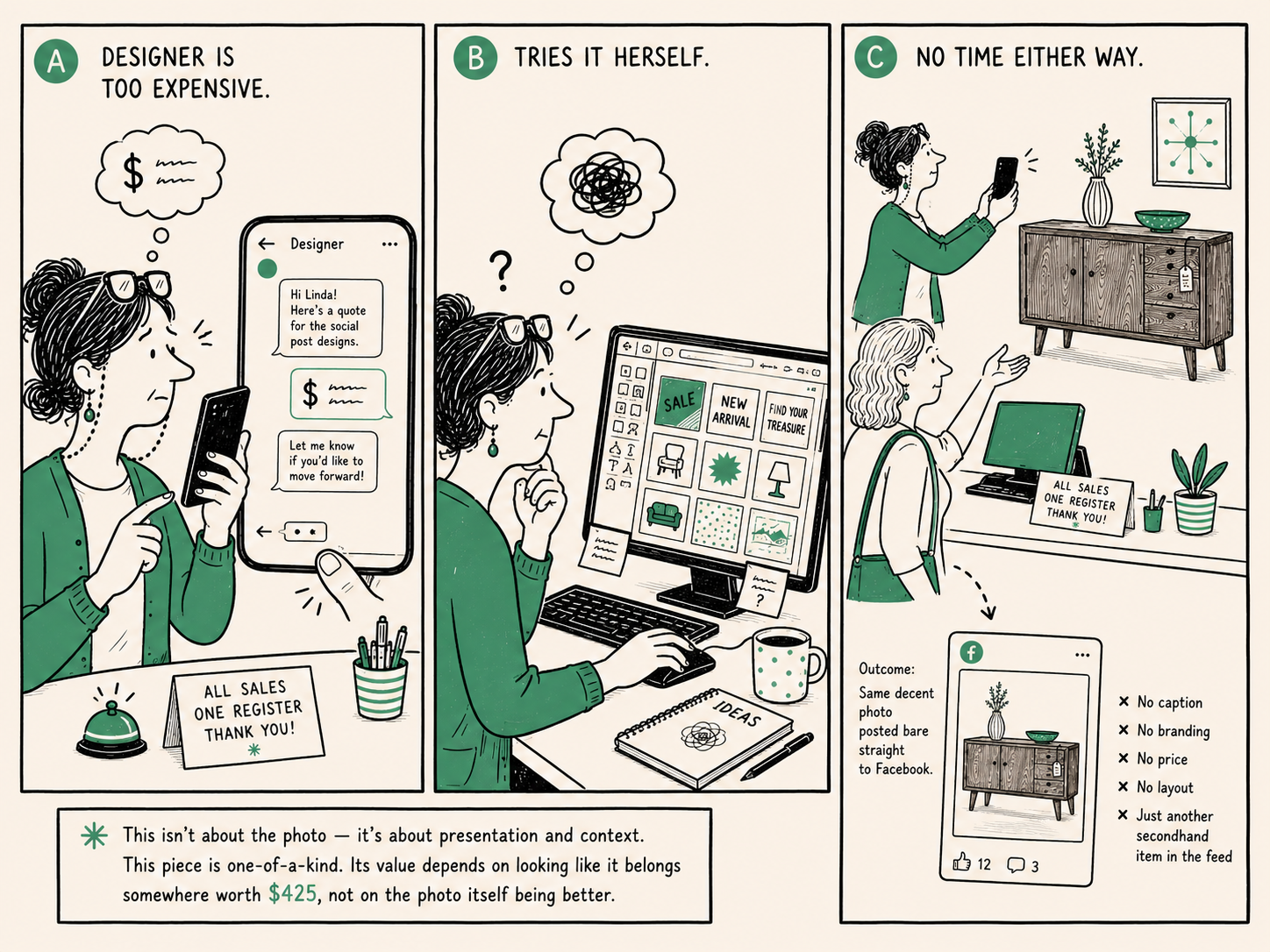
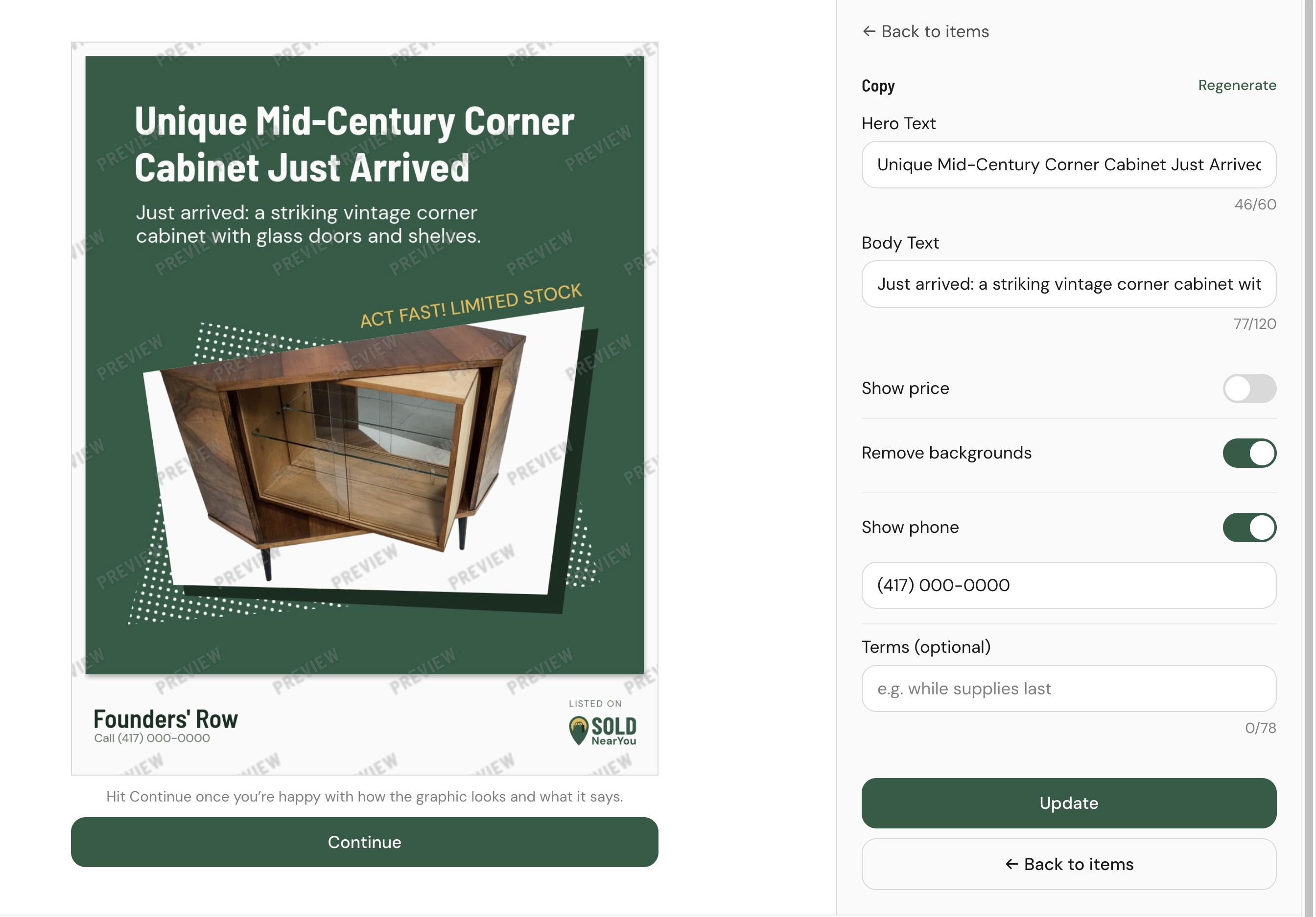
A piece like this won't come through the door again, but hiring a freelance designer for one Instagram post doesn't pencil out. So the post that actually goes out is just a phone photo dropped straight into Facebook: no price, no branding, no layout. A genuinely one-of-a-kind piece ends up looking like everything else in the feed.
Linda picks a listing in the dashboard and taps once — a branded, ready-to-post graphic with the price and her logo already on it, polished enough to match a piece she'll likely never see again.
New arrivals actually make it to Instagram, the same day they come in, looking like the one-of-a-kind pieces they are.
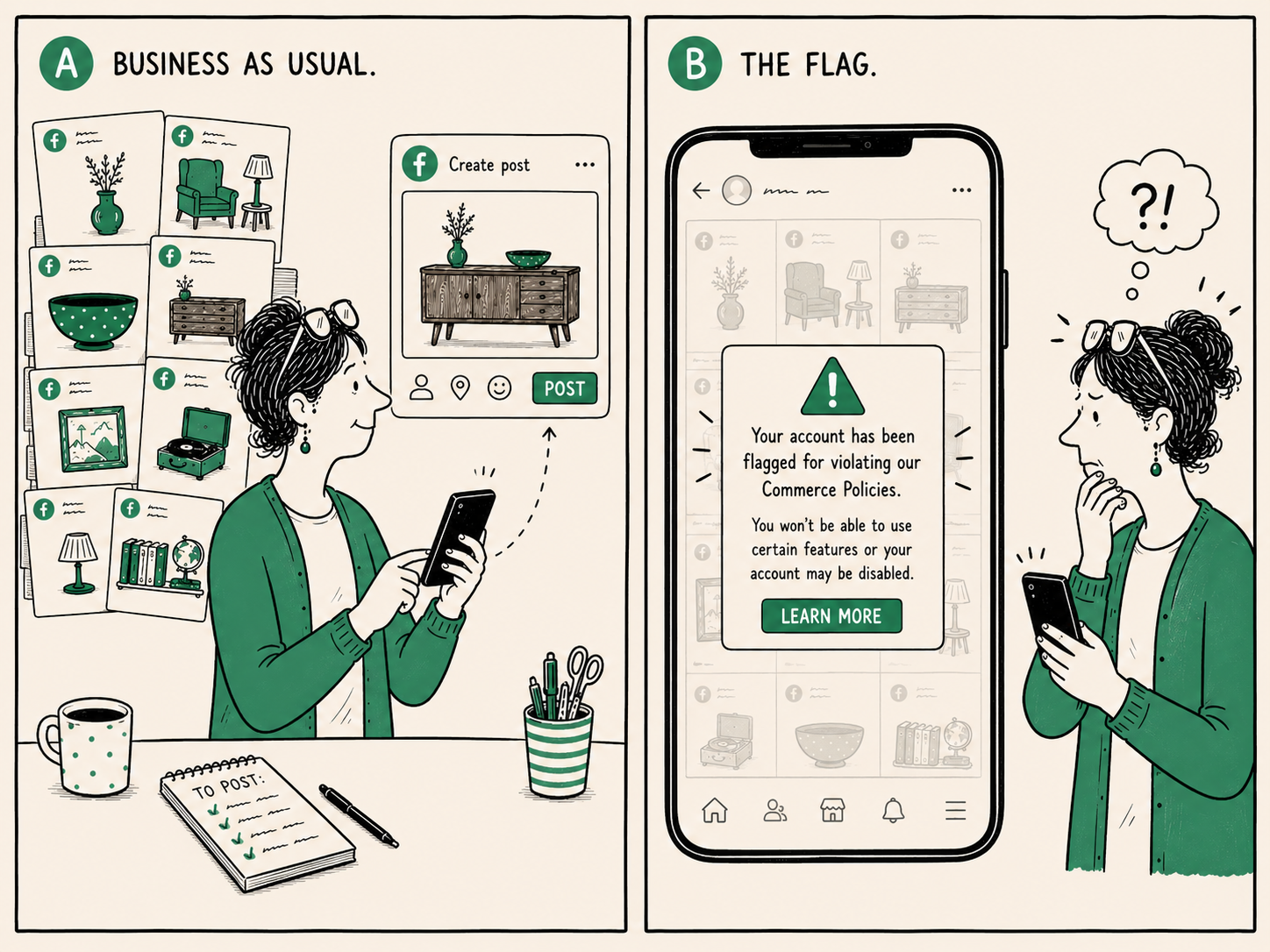
Facebook doesn't love commercial activity on a personal profile. Linda's posted enough that one bad week, one report, could get her restricted — and every bit of reach she's built disappears with it.
Linda's catalog lives at her own permanent URL, outside anyone else's rulebook.
Nothing Linda has built can be taken away by someone else's policy change.
Same URL, no matter what happens anywhere else.
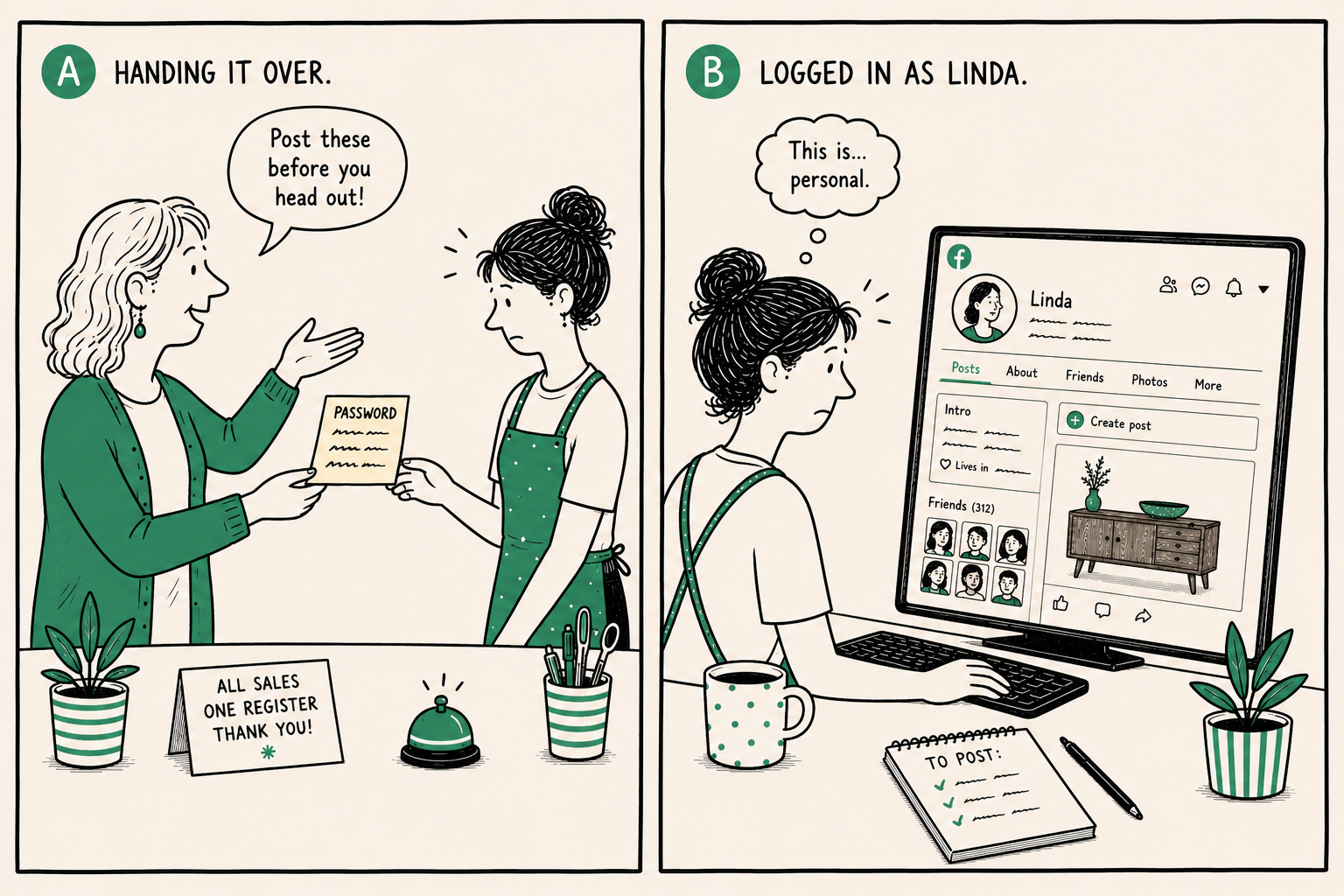
Linda has a couple of part-time helpers pricing and listing pieces across the booths she runs herself. The only way for them to post while she's not on the floor is to log into her actual personal Facebook.
Linda's helpers get their own logins, scoped to the store — nothing personal shared, no matter who's pricing pieces that day.
Whoever's helping out lists inventory without ever touching Linda's own account.
Separate logins, each scoped to the store — nothing personal shared.
Where Founders' Row stands now
Same booths, same floor, same register. Linda runs her own catalog, Jack runs his — and a lot fewer buyers or vendors are left guessing.
Book a demo
15 minutes. We'll set up a sample store with a few of your items live on the call — so you see exactly how it looks before you decide.
We'll reach out within one business day to set up your demo.